
The Clocks Went Back. Why Should Women's Freedom Go With Them?
Darker nights, personal safety and the precautions women shouldn't have to take.
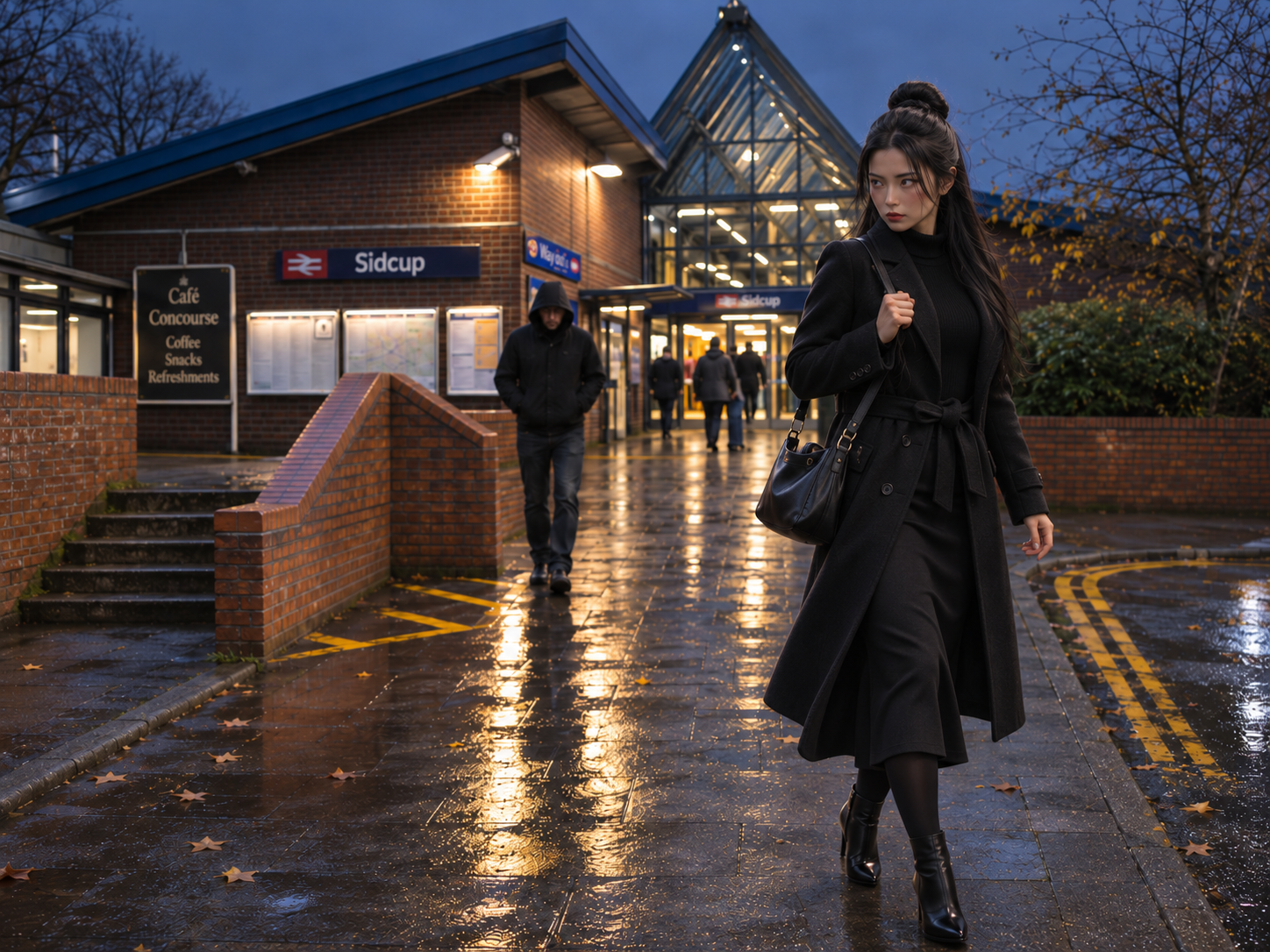
It's 5.30 pm. You've finished work, stepped outside and it's already dark.
You're walking towards the station when you notice someone behind you. At first, you think nothing of it. Then you turn a corner and they follow. You cross the road. They cross too.
Is it a coincidence? Are you imagining things? Would changing direction again make you look paranoid?
And there's the problem.
Many women have experienced situations like this. That uncomfortable feeling of being watched, followed or approached by someone whose intentions are unclear.
But why should something as ordinary as walking home require so much thought?
The Hidden Curfew
On 25 October 2026, the clocks went back across the UK. For millions of women, that means more than simply darker evenings.
Recent research from Sport England's This Girl Can campaign revealed that:
55% of women feel unsafe exercising outdoors alone after dark, compared with 33% of men.
69% of women are concerned about sexual harassment and intimidation when exercising outdoors after dark.
47% of men surveyed admitted they underestimate how much women think about their safety when exercising after dark.
These findings have prompted the return of the national Let's Lift the Curfew campaign, highlighting how concerns about personal safety restrict women's freedom.
Think about that for a moment.
We're living in 2026, yet many women still feel they must change their routines simply because it gets dark.
They stop running in the evenings, avoid certain streets, arrange lifts or decide not to go out at all.
The clocks change. Their freedom shouldn't have to.
Awareness Is Not Paranoia
At Artemis Self Defence, one of the most important subjects we teach is situational awareness.
This doesn't mean constantly looking over your shoulder, assuming everyone is dangerous or living in fear.
It means understanding your surroundings, recognising changes and noticing behaviour that doesn't seem right.
For example, someone walking behind you isn't necessarily a threat. But if that person repeatedly changes direction when you do, closes the distance or appears to be deliberately following you, their behaviour deserves attention.
The important distinction is between recognising a possible threat and convincing yourself that nothing is wrong simply because you don't want to overreact.
You don't need to prove someone has bad intentions before taking sensible precautions.
The Problem With Being Polite
Here's something we discuss regularly during our workshops.
Many people, particularly women, are reluctant to challenge uncomfortable behaviour because they don't want to appear rude, aggressive or unreasonable.
Someone invades your personal space. You say nothing.
A stranger asks an inappropriate question. You answer politely.
Someone makes you uncomfortable, but you worry that walking away might offend them.
Unfortunately, people with harmful intentions can exploit that reluctance to establish boundaries.
Your personal safety is more important than a stranger's opinion of you.
You are allowed to say no.
You are allowed to walk away.
You are allowed to raise your voice, attract attention and ask for help.
You do not owe a stranger your time, your attention or an explanation.
What If You Think Someone Is Following You?
Imagine you're walking home and believe someone is following you.
What should you do?
Firstly, avoid panicking. You need to make decisions based on what is happening around you.
If possible, move towards somewhere populated and well lit, such as an open shop, restaurant or staffed station.
Don't automatically continue towards your home, particularly if doing so means entering a quiet street or isolated area.
You can change your route to assess what's happening, but avoid leading yourself somewhere more isolated.
If you feel threatened, speak to someone nearby. Tell a shop worker, member of staff or another person that you're concerned about your safety and need assistance.
If you're in immediate danger, call 999.
And remember, you don't have to wait until someone physically touches you before seeking help.
Self-Defence Is More Than Fighting
When people hear the words self-defence, they often imagine punches, kicks and complicated martial arts techniques.
But effective self-defence starts long before any physical confrontation.
At Artemis Self Defence, we teach people to recognise developing situations, create distance, establish boundaries and identify opportunities to leave safely.
Physical techniques are part of that training, but they are not the entire answer.
If someone grabs your wrist, blocks your path or attempts to restrain you, knowing how to respond could make an important difference.
However, our aim isn't to teach people how to win fights.
Our aim is to help people avoid them, escape when necessary and get home safely.
Understanding the law is important too. In England and Wales, reasonable force may be used in self-defence where the circumstances justify it. The response must be reasonable in the circumstances as you honestly believe them to be.
The objective is protection and escape, not punishment or revenge.
Responsibility Must Be Put Where It Belongs
There is something important we need to make clear.
Women should not have to attend self-defence classes simply to enjoy the same freedom of movement as everyone else.
They should be able to walk home, exercise, travel and socialise without feeling threatened.
The responsibility for harassment, intimidation and violence rests entirely with the people who commit those acts.
Better street lighting, safer public transport, intervention from bystanders and stronger community awareness all have a part to play.
Self-defence training is not a substitute for those changes.
But while these problems continue to exist, providing people with the knowledge and practical skills to protect themselves remains incredibly valuable.
Don't Let the Darkness Decide What You Can Do
The clocks have gone back. Winter is approaching, and the evenings will continue to get darker.
But that shouldn't mean surrendering your independence.
Learn to recognise warning signs.
Trust yourself when something doesn't feel right.
Understand your personal boundaries.
Know when to walk away, when to ask for help and how to respond if a situation becomes physical.
Most importantly, remember that being prepared doesn't mean living in fear.
Confidence comes from knowledge. Awareness creates opportunities. And sometimes, recognising danger early is the most effective self-defence technique of all.
Learn Practical Self-Defence With Artemis
At Artemis Self Defence, we deliver practical, realistic self-defence workshops for schools, colleges, universities, workplaces and community groups across London and the South East.
Our sessions cover situational awareness, personal boundaries, recognising threatening behaviour, de-escalation, UK self-defence law and straightforward physical escape techniques.
We don't believe in creating fear. We believe in developing awareness, confidence and the ability to make better decisions under pressure.
Want to give your staff, students or community the skills and confidence to feel better prepared?
Contact Artemis Self Defence today to discuss booking a practical self-defence workshop.
Research and further reading
Sport England and This Girl Can, Let's Lift the Curfew, October 2026.
UK Police, Personal Safety Advice.
https://www.askthe.police.uk/faq/?id=e11ec21a-3b4b-ef11-a317-7c1e520446e1