
The Case for Self-Defence Within PSHE
A Safeguarding and Life-Skills Approach for School Leadership
Personal, Social, Health and Economic (PSHE) education sits at the heart of a school’s responsibility to prepare pupils for life beyond academic achievement. For PSHE leads and headteachers, the subject is a key vehicle for safeguarding, wellbeing, and personal development. Within this context, personal safety education, including self-defence, should be viewed as an essential element of effective PSHE provision rather than an optional enrichment activity.
Self-defence education, when delivered appropriately, is not concerned with teaching pupils to fight. Its primary purpose is prevention. Pupils learn how to recognise risk, make safer choices, and remove themselves from potentially harmful situations. These outcomes align closely with a school’s statutory safeguarding responsibilities and its wider duty of care. Much like first aid or online safety, self-defence addresses risks that may be encountered infrequently but can have serious consequences if pupils are unprepared.
A key strength of self-defence education within PSHE is its emphasis on awareness and early intervention. Pupils are taught to understand their surroundings, recognise behavioural warning signs, and identify situations where boundaries are being tested or ignored. This includes recognising coercion, manipulation, and grooming, all of which are already core safeguarding concerns within schools. By grounding these topics in practical understanding, self-defence education helps pupils translate policy and theory into real-world awareness.
Effective self-defence programmes also place strong emphasis on communication and de-escalation. Pupils are taught how to use their voice, assert personal boundaries, and disengage safely from confrontation. Physical responses are framed clearly and consistently as a last resort. This approach supports existing behaviour policies and reinforces the PSHE focus on respectful relationships, emotional regulation, and responsible decision-making.
From a pastoral and wellbeing perspective, self-defence education can have a positive impact on pupil confidence. When pupils feel more capable of recognising and managing risk, they often display greater self-assurance and improved judgement. This confidence is quiet rather than confrontational and can be particularly beneficial for pupils who feel vulnerable, anxious, or unsure of themselves. In many cases, increased confidence alone reduces the likelihood of pupils being targeted.
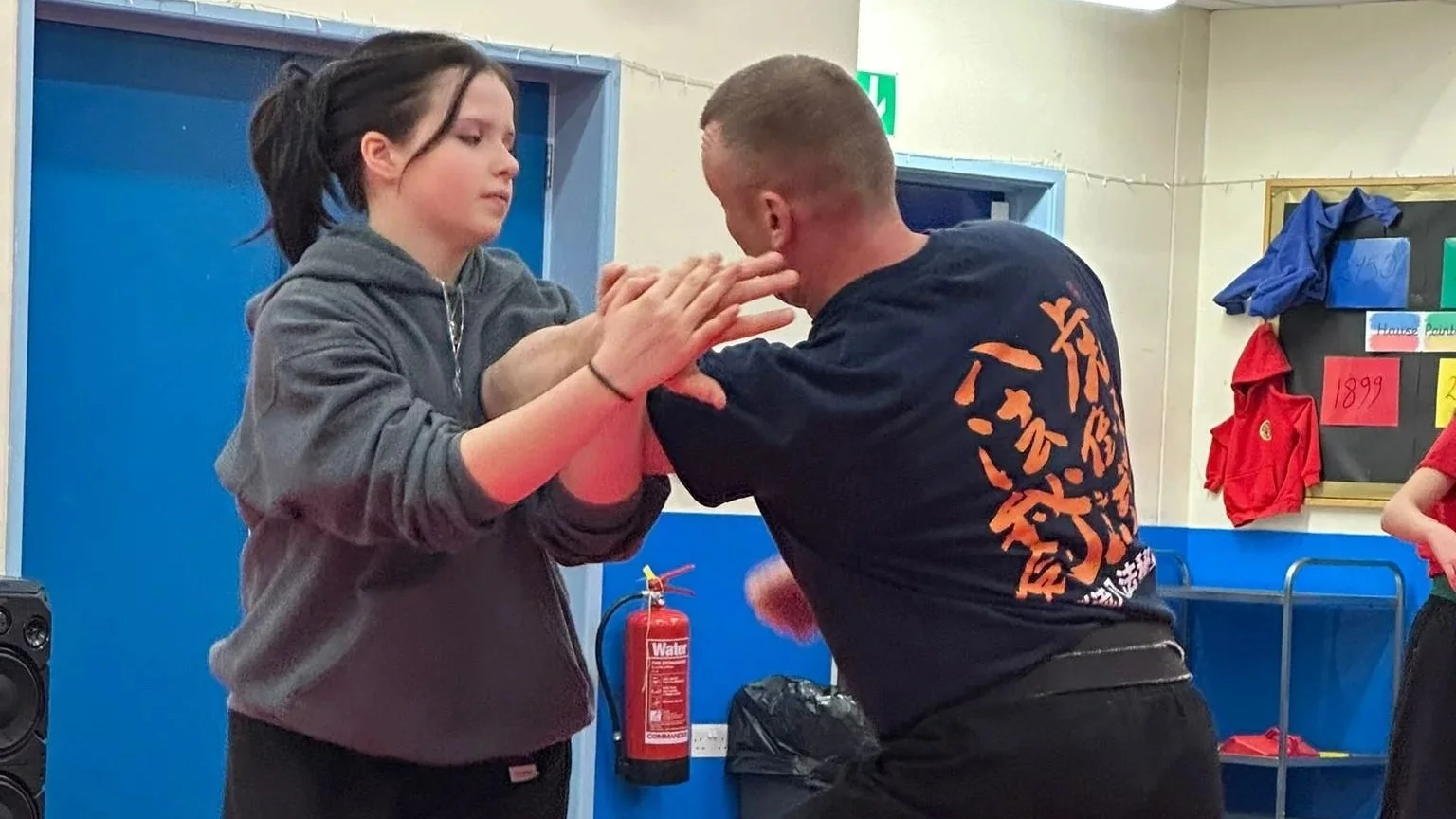
School leaders may understandably have concerns regarding inclusion, safety, and trauma sensitivity. Modern self-defence education can be delivered in a non-contact, age-appropriate, and trauma-informed manner. Sessions can be adapted for pupils of different abilities and needs, with clear emphasis on choice, consent, and personal control. Pupils are never compelled to engage physically, ensuring that participation supports wellbeing rather than causing distress.
Embedding self-defence within PSHE also strengthens the subject’s relevance and credibility. It reinforces key values such as respect for self and others, personal responsibility, and community safety, while demonstrating clear real-world application. For school leaders, this supports a coherent PSHE curriculum that not only meets statutory expectations but also equips pupils with practical skills they may rely on beyond school.
In conclusion, self-defence education within PSHE is not about promoting violence. It is about equipping pupils with awareness, confidence, and the ability to make informed decisions in situations that affect their safety. For PSHE leads and headteachers, it represents a proactive, preventative approach to safeguarding that complements existing provision and supports pupils in becoming safer, more resilient young people.